
Learn · What is a social second brain?

What is a social second brain?

A social second brain is a group's shared memory. Everyone's links, screenshots, recommendations, and notes land in one organized library—with the original source and who-said-what attached—so when it's time to plan, you start from what your group actually found. Ableten is the social second brain for group planning.

Traditional second brain vs. social second brain

A traditional second brain is solo: I save information so I can remember and use it later. A social second brain is shared: we save information together so we can remember, discuss, and decide together. The difference sounds small. It changes everything about how the tool works—who saves, who the memory belongs to, and what the output is for.

People also call this a shared second brain or a collaborative second brain—same idea: memory that belongs to the group, not one person's private archive. Unlike a bookmark bar, each item carries a highlight, a note, and a collection. Unlike a notes app, the original page stays attached. Unlike asking an AI with an empty box, plans start from sources your group chose.

Save it before the chat thread eats it

Someone found a restaurant, a paragraph, a screenshot of a menu—and then the message is buried. Ableten captures the highlight, link, or image with the original URL and a note, so the source is still there when the group plans.

Add the Chrome extension
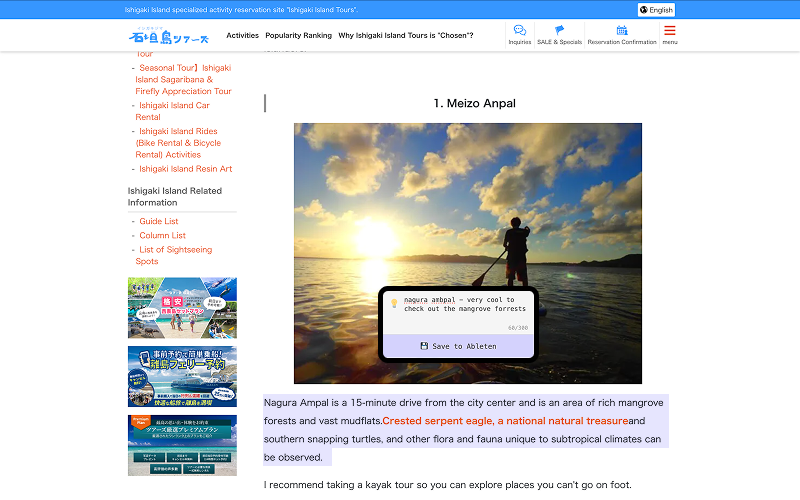
Ableten Chrome extension saving a highlight with the original page URL attached

A shared brain that files itself

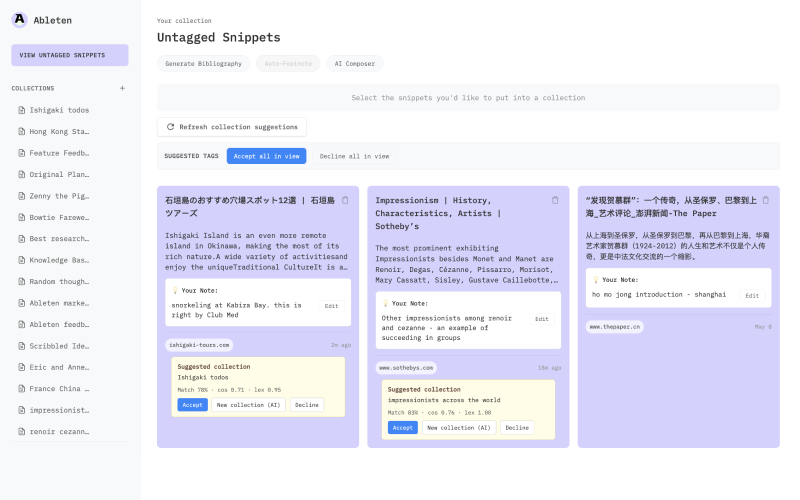
Inbox is for unsorted saves. Collections are for the trip, the project, or the decision. Ableten suggests where each save belongs, so the group's pile stays organized without anyone doing chores.

Open Ableten
Ableten organizing saved sources into a shared collection

The pile becomes the plan

Composer reads what your group already saved and drafts an itinerary or note with cites back to who suggested what. It does not invent a weekend from a blank prompt. The shared memory is the input; the plan is the output.

Sign in and compose
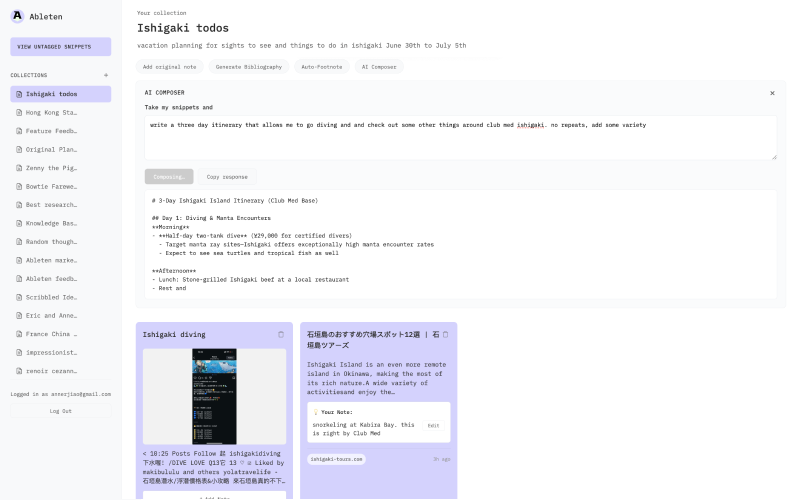
Ableten Composer drafting an itinerary from the group's saved sources with citations

Why group planning needs a shared memory layer

Origin stays attached

Every save keeps the page URL (and Maps place when it is one). Nobody is staring at a screenshot asking "where was this from?"

Who-said-what stays attached

Recs keep their attribution. "Sarah swears by this place" is information—a social second brain never loses it.

Inbox vs collections

Dump fast into Ableten Inbox. Move into a named collection when the trip or project has a shape.

Places are first-class

Google Maps pins and place pages become itinerary material, not another dead link in a chat.

Share the pile, not a screenshot

Ask a Friend and shared collections keep recs in the library with attribution—not buried in the group chat.

Plans cite what you saved

Composer points back at library items. Alignment is "we saved this," not "the model guessed this."

How a social second brain differs from the tools you already use

vs. notes apps and Notion

Traditional second-brain tools are built for one person's archive. Ableten is built for a group's decisions: shared collections, attribution, and plans everyone can shape.

vs. Pinterest boards

Boards collect images without context. A social second brain keeps the highlight, the note, the source, and turns the board into an actual plan.

vs. WhatsApp group chats

Chats are where recs go to die—no origin, no structure, no memory. Forward the screenshot to Ableten and it becomes a searchable, plannable source.

vs. Google Maps lists

Map lists remember places but forget why—who recommended it, what they said, what else you saved about it. Ableten keeps places inside the group's full research pile.

vs. shared docs

A shared doc starts empty and goes stale. A social second brain fills itself as your group browses, and Composer drafts the doc from what you saved.

How Ableten connects to the rest of your stack

Save from the browser, keep Maps places as sources, bring in the crew's recs, then compose a plan that cites the library.

Chrome extension

Highlight and save the page you are on. Origin URL comes with the clip.

Google Maps / places

Drop a place into a collection. It stays a source, not a dead pin.

Ask a Friend

Bring recs into the same library instead of losing them in chat.

Composer

Turn a collection into an itinerary or note with cites back to saved sources.

How to build your group's social second brain

  1. Add Ableten for Chrome

    Install the extension so you can highlight and save without copying into a doc.

  2. Save as you browse

    Clip a paragraph, a link, a screenshot, or a Maps place. Origin stays with the save.

  3. Land in Inbox

    Unsorted saves sit in Ableten Inbox until you are ready to sort.

  4. Make a collection for the plan

    Name the trip, the project, or the decision. Move the relevant sources in.

  5. Bring in the group's recs

    Write why it mattered. Ask a Friend so recommendations land in the same pile with who-said-what attached.

  6. Compose from the library

    When the collection has enough, use Composer to draft an itinerary or note that cites those sources.

What groups do with a social second brain

Group trip planning

Travel is the clearest demo: everyone sends links, screenshots, TikToks, Maps pins, and restaurant recs—and Ableten turns that scattered group research into a shared memory and a cited itinerary.

Open Ableten

Shared research piles

Highlights and OCR from screenshots stay grouped. Drafts can point back at the clips—and at who found them.

Group recommendations

Keep the crew's recs in the library with attribution, not buried in a thread. "You have to go here" becomes findable forever.

Social second brain FAQs

What is a social second brain?

A social second brain is a group's shared memory: everyone's links, highlights, screenshots, and recommendations land in one organized library, so the group can remember, discuss, and decide from what it actually found. Ableten is the social second brain for group planning.

How is it different from a traditional second brain?

A traditional second brain is solo: I save information so I can remember and use it later. A social second brain is shared: we save information together so we can remember, discuss, and decide together—with who-said-what attached.

How is it different from a group chat?

Group chats are where recommendations go to die: no origin, no structure, no memory. A social second brain keeps the source, the note, and the collection every rec belongs to.

Do my friends need Ableten accounts?

No. Friends can forward links and screenshots to your capture address, and shared collections keep everyone's recs together with the original source attached.

Is Ableten only for travel?

Travel is the first vertical and the clearest demo—everyone sends links, screenshots, TikToks, Maps pins, and restaurant recs, and Ableten turns that scattered group research into a shared memory and a plan. But any group that saves and decides together can use it.

Does Ableten invent sources we did not save?

No. Composer works from your group's library. Alignment is "we saved this," not a weekend invented from a blank prompt.

Who is a social second brain for?

Trip crews, friend groups, families, and teams—anyone whose recommendations are scattered across ten chats and five spreadsheets.

Start your group's social second brain

Install Ableten, save the next thing worth keeping, and let the whole crew's finds become the plan.